
Why Your Garden Could Be Your Most Valuable Asset: Modular Homes & Planning Changes in Ireland
Thinking about adding a modular home to your garden? Discover the latest Irish planning changes, rental potential, and what it means for homeowners and buyers.
Back Garden Modular Homes in Ireland: A Small Change That Could Have a Big Impact
Ireland’s planning system is undergoing a structural overhaul, but one of the most interesting changes isn’t happening at large scale developments - it is happening in people’s back gardens.
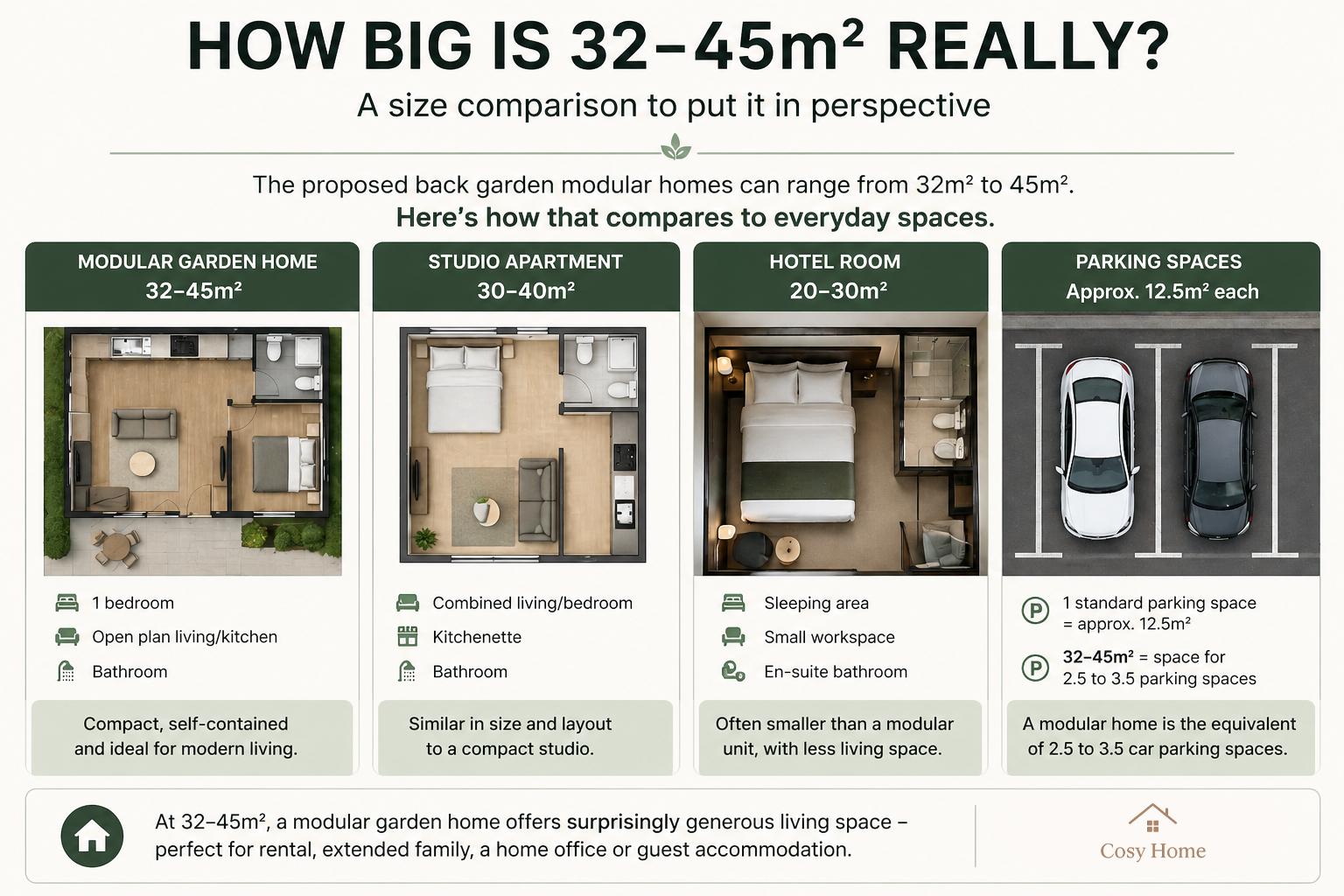
In April 2026, the Government approved proposals to allow modular homes (32–45m²) to be built in rear gardens without planning permission, marking one of the most significant changes to exempted development rules in decades.
This isn’t just a small change - it has real knock-on effects for homeowners, investors, and the rental market.
What exactly is being proposed?
Under the new rules currently progressing through the system:
Homeowners can build a detached, self-contained unit in their garden.
Size range: 32m² to 45m².
No planning permission required (subject to conditions).
Units must:
Be located to the rear of the property.
Maintain minimum garden space (approx. 25m² remaining).
Have separate access.
Comply with building regulations.
This represents a major shift - because for the first time, habitable residential units (not just sheds or offices) can fall under exempted development.
From “granny flats” to rental units.
Originally, the concept was framed as:
Space for family members.
Short-term independent living (e.g. adult children, elderly parents).
But the policy has evolved. The Government now intends to allow:
Private rental of these units.
Potential inclusion under the Rent-a-Room scheme (up to €14,000 tax-free income).
This is a significant shift - effectively creating a new micro-rental category within existing homes.
Why is the Government doing this?
The rationale is clear and consistent across official and policy commentary:
1. Increase housing supply quickly.
These units:
Can be delivered faster than traditional housing.
Require no planning process.
Use existing serviced land (gardens).
Government sees them as “an added layer of supply” during the housing crisis.
2. Reduce pressure on the planning system.
A key objective is to:
Remove smaller applications from the system.
Allow planners to focus on:
Large housing schemes.
Infrastructure projects.
This aligns with the broader reform agenda under the Planning and Development Act 2024.
3. Support intergenerational living.
There’s also a social policy angle:
Allow families to stay together.
Provide semi-independent living without full relocation.
What are the conditions and limitations?
While no planning permission is required, this is not a free-for-all. Key conditions include:
Only owner-occupiers can build them.
Must remain ancillary to the main dwelling.
Must comply with:
Building regulations.
Fire safety.
Services connection.
There are also ongoing discussions about:
Whether tenants will be covered under the Residential Tenancies Acts.
How these units will be regulated long-term.
Industry concerns (and why they matter).
Despite strong government backing, there is serious professional debate around the policy.
1. Risk of a “shadow rental market”.
Because these units may fall outside standard tenancy protections:
Occupants could be licensees rather than tenants.
Fewer legal protections may apply.
2. Quality and standards.
Concerns include:
Substandard construction.
Overcrowding.
Lack of inspection/enforcement.
3. Infrastructure pressure.
Even small units:
Add demand to water, waste, parking, and transport.
May strain suburban infrastructure not designed for higher density.
4. Planning by stealth?
Some planners argue this effectively introduces:
Incremental densification without oversight.
A shift away from coordinated urban planning.
What this means for the property market.
This policy could have real, practical impacts:
For homeowners:
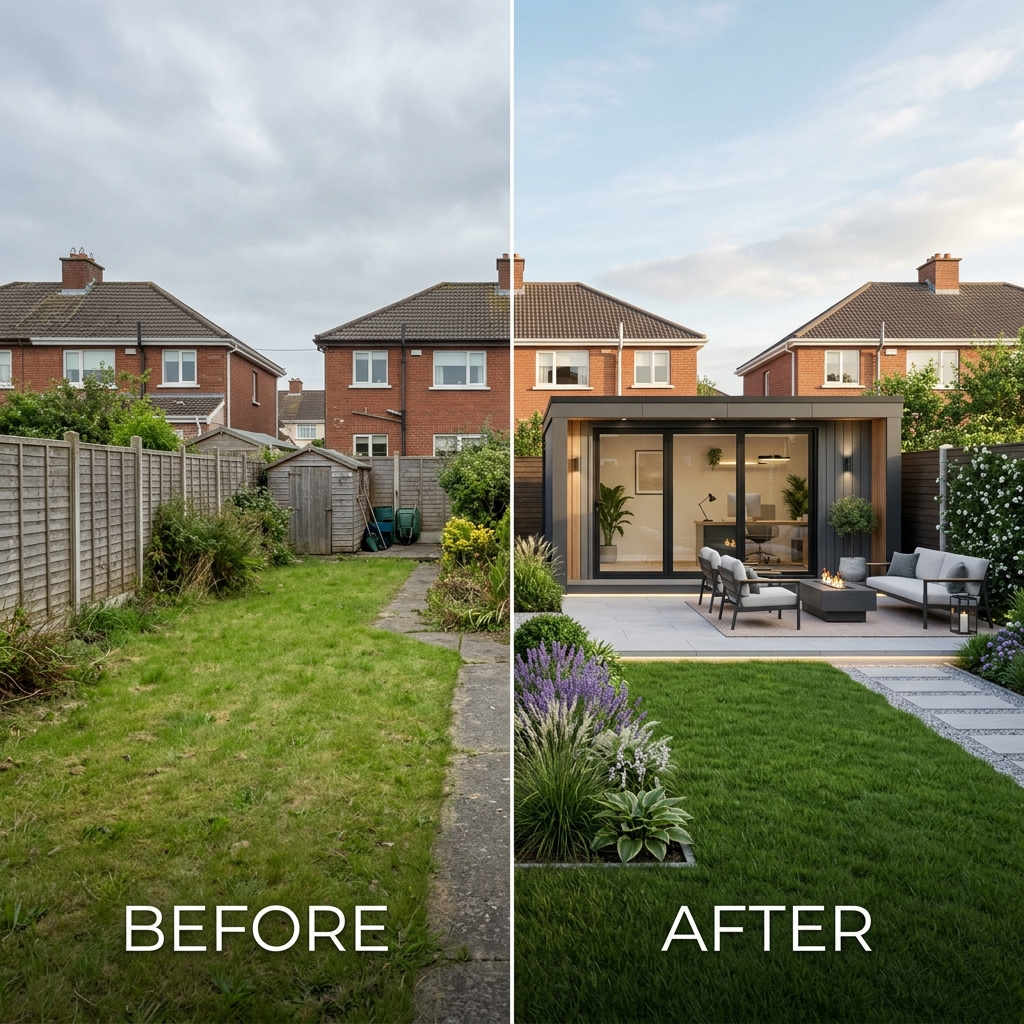
Opportunity to generate income and add flexible living space.
Increased value of larger gardens and corner sites.
For investors:
A potential new strategy:
Acquire houses with large plots.
Add modular units for yield.
For buyers:
Garden size becomes more valuable than ever.
Properties with development potential may command premiums.
Final thoughts.
Back garden modular homes might seem like a niche policy, but they point to something much bigger - a real shift in how the State is approaching land use, planning, and housing delivery.
If implemented well, they could unlock thousands of small, usable units, provide more flexible living options, and ease pressure in high-demand areas. If not, there are genuine risks around build quality and the gradual erosion of planning standards.
Either way, this is one of the most important changes to watch over the next 12–24 months, particularly for anyone buying, selling, or investing in property. It also highlights the growing importance of understanding not just the house itself, but the potential of the site - something we work closely with clients on at Cosy Home Estate Agents when sourcing properties, advising buyers and sellers, and identifying opportunities that others might overlook.
Follow us on social media
