
Rent Reviews and Resets: Ireland’s New Rules for Landlords
Starting 1st of March 2026, only tenancies beginning on or after that date will be covered by the new rent rules. Existing rentals continue under the old rules until the tenancy ends.
Here’s our friendly Q&A to help landlords (and curious renters) understand rent reviews and rent resets under the new laws.
1. What’s the difference between a rent increase and a rent reset?
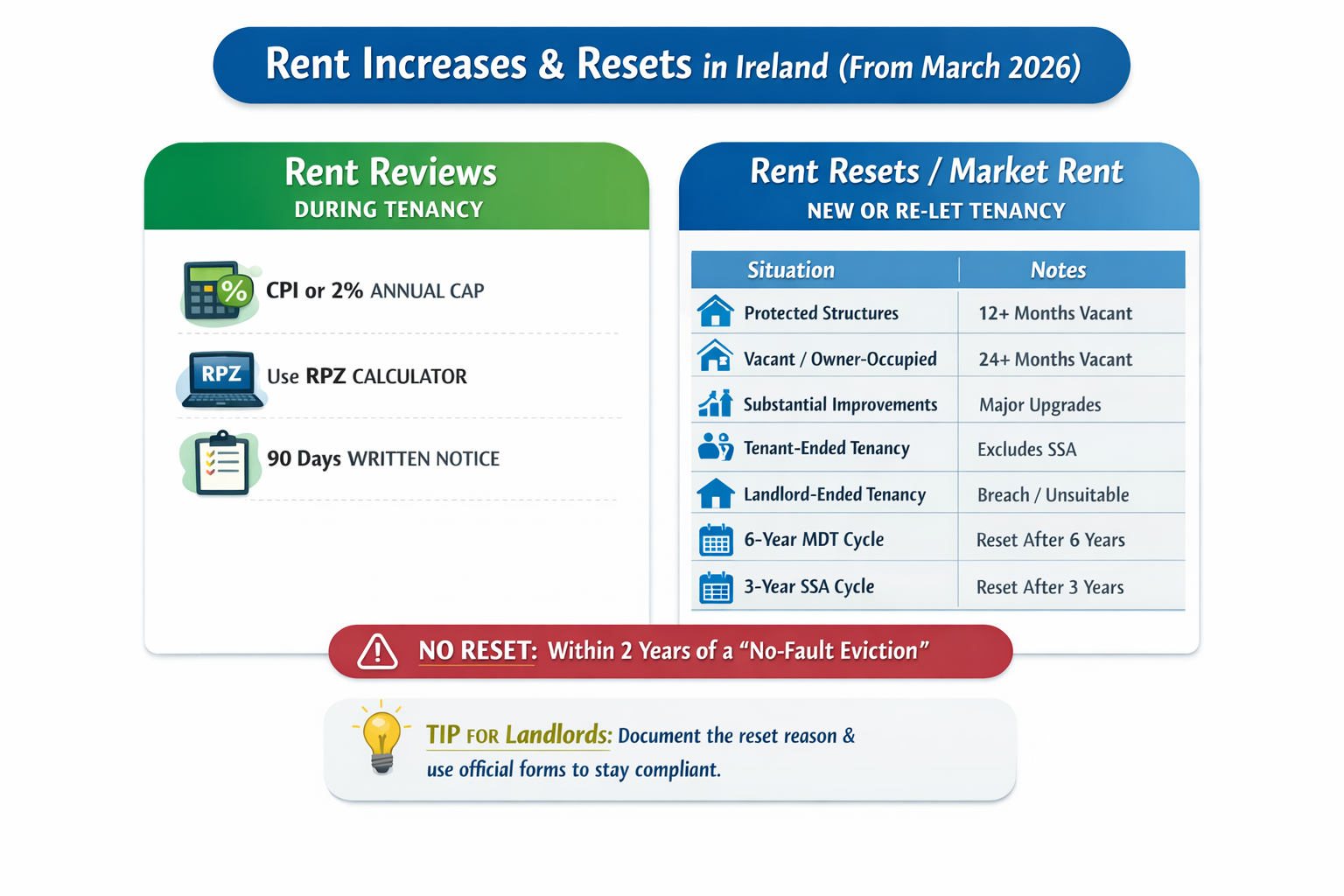
Rent increase: Happens during an ongoing tenancy, capped at CPI or 2% per year, whichever is lower.
Rent reset: Setting a new rent at market value, usually at the start of a tenancy or after a six-year cycle under a Minimum Duration Tenancy. (gov.ie)
2. When can landlords reset rent to market value?
Landlords can reset rent for:
Tenant-ended tenancies (except Student-Specific Accommodation, SSA).
Landlord-ended tenancies for limited reasons such as rent arrears, breach of obligations, unsuitable property.
After a six-year cycle of a Minimum Duration Tenancy (MDT).
After a three-year cycle for SSA.
Protected structures unused for 12+ months.
Vacant or owner-occupied homes not rented for 24+ months.
Properties re-let after substantial improvements.
Important: Rent cannot be reset to market value within two years of a ‘no-fault’ eviction. (gov.ie)
3. How often can rent be reset on the same property?
After a six-year cycle of a Minimum Duration Tenancy.
After a three-year cycle for Student-Specific Accommodation. (gov.ie)
4. What are the rules for rent increases during an ongoing tenancy?
Annual increases are capped at CPI or 2%, whichever is lower.
Landlords must use the RPZ calculator (until the new system fully replaces RPZ).
A specific rent review form must be issued to the tenant. (citizensinformation.ie)
5. What Are the Requirements for Resetting Rent for a New Tenancy?
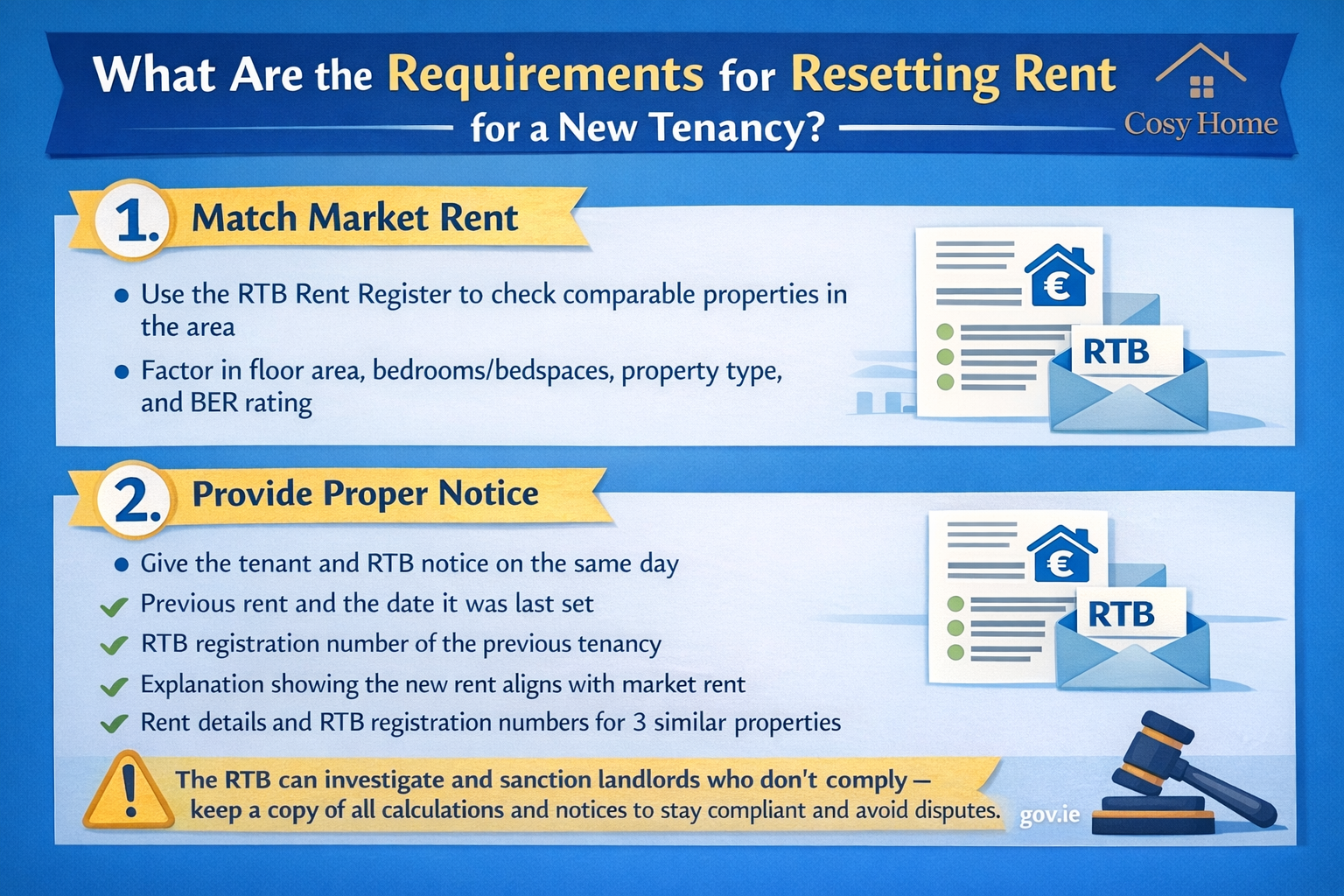
When setting rent for a new tenancy, landlords must ensure the new amount reflects current market rent. This involves checking similar properties on the RTB Rent Register and considering factors like size, number of bedrooms, property type, and BER rating to make sure the figure is justified.
Landlords must also notify both the tenant and the RTB on the same day. The notice should clearly outline the previous rent, when it was last set, the previous tenancy’s RTB registration number, and explain how the new rent was calculated. Details of three comparable properties must also be included as evidence.
The RTB can investigate and issue sanctions if the process isn’t followed correctly, so it’s important to keep copies of your calculations and all notices for your records.
6. Can tenants challenge a rent review or reset?
Yes. Tenants can apply to the Residential Tenancies Board (RTB) if they believe the increase is unreasonable or does not follow the rules. The RTB can issue a binding decision. (mondaq.com)
Feeling stressed keeping up with existing and upcoming rental legislation?
At Cosy Home, we support self-managing landlords with all the administration: issuing rent review and rent reset notices, handling initial and annual registrations, and managing RTB notices - all managed online for efficiency, with notices posted where required, professionally and at competitive fees.
We also let and manage properties across Galway County, taking the hassle out of being a landlord.
Get in touch today and let us make managing your rental administration smooth, simple, and stress-free!
Follow us on social media
